Day: May 17, 2024

  • The Role of Others

    The Role of Others

    This is a topic that is near and dear to my heart. One of the blessings that came out of our long journey with cancer was the many amazing people we that we were blessed to have met along the way. We really made some life-long friends.  I can remember thinking that each person was filling a specific need in our lives at that time, and most of them probably did not even know it.

    Many times I would have friends say to me “I want to do something for you, but I just don’t know what to do.”  What I learned is that they really meant that, and to let them help was not only going to bless to me and my family, but it would bless them as well.  Caregivers, there may be days you don’t need a thing but a hug and a prayer, but there will also be days you need the help of many.  Please ask for or accept the help when you need it.  I will confess that I did not always do that, but looking back I wish I had.

    Perhaps you know someone that is experiencing a difficult time right now in their lives.  Please reach out to them.  I know sometimes it can feel uncomfortable to do it, but I can promise you as someone who has been the receiver of countless kind gestures, it is always a blessing and will never be unappreciated.

    Never underestimate the power of a card, phone call, email, or hug.  Nothing is too small in the eyes of a person who may be having a day where they are feeling broken, sad, exhausted, or lonely.  As rewarding as being a caregiver can be, it can also be a very lonely path to walk.

    I recently spoke to a very dear friend of mine, who was also thrust into the role of a caregiver around the same time as me. We both agreed on how much it meant to us to have someone just take the time to ask us how we were doing.  It is not a selfish thing to want people to care about you!

    I always be grateful for the immense support that I received from others.  Because those seeds of generosity were planted in my life, I strive to water them, nourish them, and plant them in the lives of others.

    “Our happiness is greatest when we contribute most to the happiness of others.” -Harriet Shepard

    Originally published on Shannon Miller.

  • You vs. Home Healthcare: “Why is there a nurse in my kitchen?”

    You vs. Home Healthcare: “Why is there a nurse in my kitchen?”

    I remember asking myself this question once, and it was certainly a turning point in my caretaking journey. For us, home healthcare (HHC) came in at a time when my husband needed twice-daily IV antibiotics and wound care. It was an interesting point along the road, because it not only made me realize that I indeed could not do everything my husband needed, but it also involved an “invasion” of our own personal, peaceful space.

    HHC often involves relinquishing some control as a caregiver. In our first round with HHC, the agency was assigned to us by the hospital. The first appointment was at least two hours spent in my living room going over the loads of information that I was just starting to understand myself. I did not realize at this point that I actually had a choice (or at least as much of one as insurance allowed) in what agency I wanted taking care of my loved one.

    In our “rookie stages” of HHC, we had nurses in our home anywhere from 5-7 days a week. Given this time, I picked up a thing or two along the way. HHC is a unique experience, but just as you would with anyone who comes into your home on a regular basis, it is of the utmost benefit for the caregiver of the patient to develop a good working relationship with the visiting nurses.

    Honestly, it was a difficult adjustment with some of the initial nurses. I could usually tell immediately if my husband was comfortable with whoever the agency sent. He was the one who was being treated, and if he wasn’t comfortable, then neither was I.  I quickly learned that I could request different nurses. Some nurses might, for instance, be more proficient with PICC lines than others, or even gentler with changing bandages. These are the slight changes that minimize the discomfort as the transition from hospital to home takes place.

    Sometimes, caregivers and patients may find themselves in a place where they are just not comfortable with a specific HHC agency. You have the power and the right to choose who comes into your home to treat your loved one. There are definitely some really great agencies out there, and sometimes it takes being a vocal advocate for your loved one to find the one that works.

    We were fortunate enough to develop a good “working relationship” with some of the nurses we saw on a regular basis. I learned that there was a bit of give-and-take to making HHC work best for my husband. While doctor’s appointments were virtually impossible to reschedule, most of the nurses were able to work with us to accommodate our time frame. HHC nurses generally make their “rounds” each day, and they can usually be flexible. Don’t be afraid to check.

    More often than not, you will be problem-free with HHC. If there is an unfortunate situation where you or your loved one is dissatisfied, there is usually an on-call nurse manager that you can contact. In any case, working with HHC is often a “trial run” scenario. Find who and what will work the best for you and your loved one.

    “The blessings that come from reaching out to others cannot be overestimated.” Barbara Johnso

    (originally published on Shannon Miller)


  • Your Life is About to Change

    Your Life is About to Change

    I remember that day standing in the emergency room waiting on the doctor’s to come back with the results from the MRI. The minute he showed us the tumor on the spine, we (myself, my husband Nick, and my then 16-year old son Aaron) knew that my husband’s cancer had come back, and we knew that we would be facing a whole new battle as a family.

    The moment he delivered the news, I was flooded with thoughts about how this would affect jobs, finances, children…life as we knew it. It was without a moment’s hesitation that I realized my role as a wife and a mother was about to be transformed as my husband became a cancer patient.

    I had no idea how exhausting, painful, and transformational this experience was ultimately going to be.

    But for the caretaker, these feelings and considerations are certainly not unfamiliar. The very first thing you face is having to understand what this means for you, your family, and your loved one as you take the first step down this walk that will test your physical, mental, and spiritual endurance.

    I cannot express the importance of faith in a moment like this. My conversations with God about the changes to come were pretty much the only thing I held on to in those first hours, days, and weeks. I threw myself into this walk 150%. There was no consideration of my own physical and emotional well-being, because I was riding on love, fear, and adrenaline at 100 miles-an-hour.

    Looking back, however, I think during this time I gave up my right to take care of me because of an immense devotion to taking care of the man I loved. Yes, this is our call as caretakers, but this does not need to be what defines the caretaker’s journey.

    After your prayers, after your tears, and after your first good rest, take the time to figure out how you’re going to keep your life as normal as possible. I quickly realized that my husband was not being diagnosed with cancer every day. The devastation was not going to rule. Life was going to go on, and the only thing I could do was live it.

    I hope to be able to share how I learned the importance of taking care of yourself as the caretaker, so that you can be there when you’re needed most. My heart is to be honest about each physical toll and mental struggle throughout this journey, and help others through the many changes you face alongside your loved one.

    “When you see obstacles in your path and it seems you are unqualified for the task at hand, know that you will not really be doing the work. God will. He will give you the slingshot to slay your giants or the power to part the seas.” -Kozar and Woody, Babes with a Beatitude

    (originally published on Shannon Miller)

  • Be Choosy

    Be Choosy

    Our journey was one that was filled with so many doctors, hospitals, and procedures. Let’s just say in one way or another we visited just about every floor at the hospital. For the most part we were very blessed to have a good medical team surrounding us.

    What I came to realize, however, was that we were going to be seeing many of the same doctors routinely and for a long time, so it was important for us all to become comfortable with one another. One thing we as caregivers have and should utilize more frequently is a voice. We do have a say in many things when it comes to our loved one’s care and who is providing it.

    We rarely had to request any changes, but when we did, it always turned out to be for the better choice for us. One particular time we made that request was with our oncologist. For you caregivers of a cancer patient, you know how important this particular doctor can be. He was a great oncologist, but his delivery of information was very “rough around the edges,” and we really needed and wanted someone who was a little less matter-of-fact and a bit more compassionate. It was one of the best things we could have done. The information we received from the new oncologist was still the same, but the way in which it was delivered had been softened and made it little easier for my husband to hear.

    Usually, there is a patient advocate or case manager at the hospital you can go to for any requests or changes you may need or want to make. It is probably a good idea, especially if you know you will be at the hospital for a long period of time, to go ahead and find out who the patient advocate or case manager is and how you can reach them if you ever need them.

    You have the right to be “choosy” with the care your loved one is receiving. It is a lot easier on you to make the changes when you recognize the need instead of waiting until later when you will probably have a lot less time and/or energy. Don’t be afraid to make changes in any area of care that may be needed. You are not the first, nor the last caregiver that may need to request a change. The patient advocates and case managers understand that you are not out to hurt feelings when you are requesting a change, but that you are just trying to do what is best for you and your loved one.

    You have a voice and a choice, use them!

    “No one else can ever make your choices for you. Your choices are yours alone. They are as much a part of you as every breath you will take, every moment of your life.”— Dr. Shad Helmstetter, Choices

    (originally published on ShannonMiller.com)

  • Packing Up Memories

    Packing Up Memories

    I can vividly remember when I decided it was time to tackle my husband’s closet. He had always made it clear that he wanted his clothes donated to a charity that could use them. I had thought about doing this before, but somehow I wasn’t ready until now. Gradually, I’ve been adjusting things around the house—removing a little here, rearranging a bit there, trying to convince myself that these small changes weren’t really about letting him go.

    I began with determination. With each shirt I folded, memories of Nick—tall, debonair, wearing his bright smile—flooded back. As I sorted his ties, many of which were Father’s Day gifts from the kids, and his favorite pair of jeans that I had often teased about discarding, each item sparked another cherished memory. Even his sweater vests brought back vivid moments of laughter and love. It was comforting, in a way, to reminisce and feel his presence so vividly through these mementos.

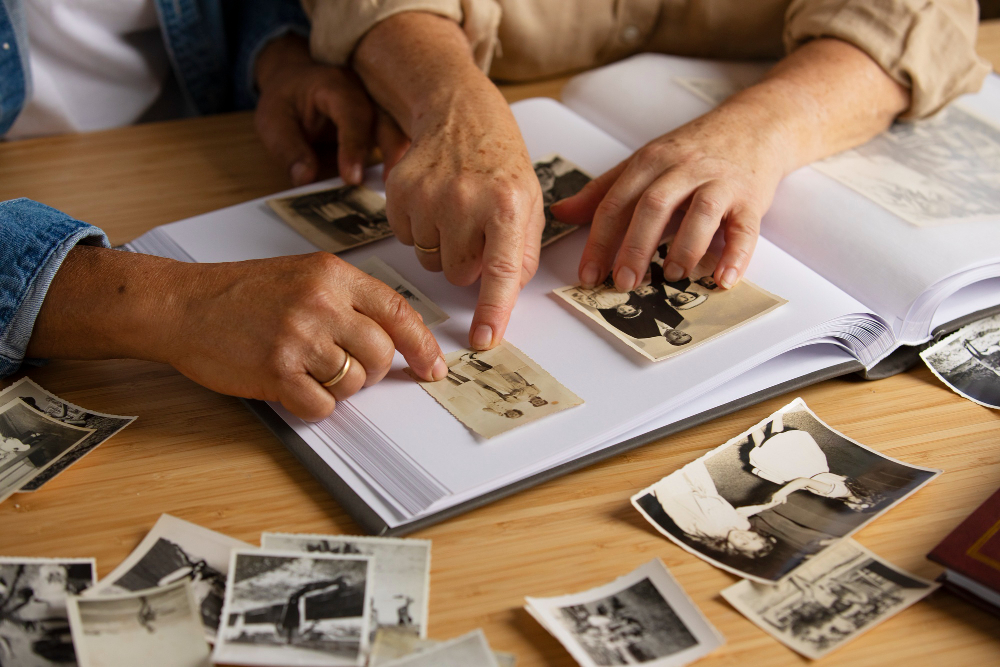
    When everything was packed and labeled by the front door, I paused and turned back. A lump formed in my throat, tears welled in my eyes as I realized I was looking at a collection of beautiful memories, not just clothes. It was about the man who wore them, the life he lived, the way he loved, and the space he filled in our hearts.

    Life can be overwhelming, and it’s easy to lose focus. Engaging in things like going through your lost loved one’s belongings—certainly helps realign perspective. It might seem minor to others, but to a widow charting a new path, it’s monumental. Even 13 years later and it can still take immense mental and emotional strength to navigate through certain things.

    This experience also served as a poignant reminder of an essential truth that I sometimes allow to fade into the background: the fleeting nature of life. We are not guaranteed another moment, and every second we experience is a precious gift. This perspective is vital, yet it’s all too easy to lose sight of it amid the hustle and bustle of daily responsibilities and challenges.

    It’s somewhat embarrassing to admit just how often I forget this fundamental truth, especially when caught up in the distractions and stresses that life throws my way. However, moments like these serve as crucial wake-up calls, prompting me to refocus on the present and cherish every moment I am given.

    Being thankful and counting your blessings, especially during challenging times, is essential for maintaining momentum in life. It’s important to recognize the small victories and the growth that comes from enduring hardships. Embracing your journey with the support of faith, family, and friends can lead to profound peace. These are not just occasional comforts; they are critical elements that can sustain you through any storm.

    This process is a daily endeavor—clinging to faith through the tough moments requires continuous effort. Integrating important, life-affirming habits into your daily routine is key to not only enduring but thriving. Each day offers a new opportunity to live fully, driven by a spirit of gratitude and bolstered by the enduring support of your loved ones and your faith.

    “Live not one’s life as though one had a thousand years, but live each day as the last.” —Marcus Aurelius