Category: Grief Coaching Insights

  • Holding Space Together or Walking One-on-One

    Holding Space Together or Walking One-on-One

    Grief is not one-size-fits-all. It doesn’t follow a schedule. It doesn’t arrive with instructions. And it certainly doesn’t disappear on command. Some days it whispers, and other days it roars. But one thing is certain—we aren’t meant to carry it alone.

    When you’re grieving, finding the right kind of support can feel overwhelming. Do you join a group? Do you seek one-on-one coaching? Do you just try to “tough it out” because you don’t want to burden others?

    If you’re asking those questions, you’re not alone. And you’re not failing. You’re human.
    Let’s take a closer look at the beauty and benefits of both grief support groups and one-on-one grief coaching, because the path to healing is deeply personal—and you deserve to choose the one that speaks to your soul.


    🤝 The Power of Group Support: “I’m Not the Only One”

    There’s something sacred that happens in a circle of people who truly get it. A support group offers community, connection, and shared understanding. Whether it’s made up of parents, spouses, siblings, or friends who have experienced loss, the common thread is the safe space it creates.

    In a group, you hear stories that sound like your own. You see tears that mirror yours. You begin to realize you’re not alone in the ache you feel—and that in itself is healing.

    Benefits of Group Grief Support:

    • A sense of belonging when grief feels isolating
    • Opportunities to learn from others’ journeys and coping tools
    • A place to express your story without judgment
    • Connection with people who truly understand, even without words

    Sometimes, group support is the very first place someone feels seen after a loss. It’s not about fixing each other—it’s about witnessing and walking together.


    💬 The Intimacy of One-on-One Coaching: “This Is Just for Me”

    Grief coaching in a one-on-one setting allows for deep, focused support tailored specifically to your grief experience. No two losses are alike—and in individual coaching, your story takes center stage.

    It’s a space where you don’t have to share time, filter your feelings, or wait your turn. You get undivided attention, a guide who walks beside you, and someone who helps you find your footing again—without rushing your process.

    Benefits of 1:1 Grief Coaching:

    • Personalized tools and support for your unique journey
    • A private, confidential space to process pain, anger, and hope
    • Faith-based, spiritual, or mindset coaching (if desired)
    • Space to explore purpose, identity, and life beyond the loss

    Many people find that one-on-one coaching allows them to dig deeper into their grief, find clarity amid the fog, and begin making gentle steps toward healing and growth.


    🧭 So, Which Is Right for You?

    Here’s the truth: both types of support are powerful in their own way. Some people begin in a group and later transition to individual sessions for more focused healing. Others start with coaching and later join a group for community and long-term encouragement.

    There’s no wrong choice—only your next right step.

    The most important thing? You don’t have to grieve alone. Whether you find comfort in the shared stories of a group or the stillness of a one-on-one conversation, healing begins when you allow yourself to be supported.

    You are worthy of that support.

    You are worthy of healing.

    You are still here—and that matters.
  • Grief Needs Good Company: The Right Friends Make All the Difference

    Grief has a way of stripping life down to its rawest layers. Suddenly, everyday routines feel foreign, conversations feel heavy, and the world keeps spinning while yours stands still. It’s during these fragile, aching seasons that friendship doesn’t just matter—it becomes essential.

    Not just any friendship, though. I’m talking about the kind of sacred, soul-level connection with friends who just get it. The ones who show up with your favorite snack, not empty clichés. The friends who instinctively know when to give you space, and when to scoot over and silently share the couch with you—no words, just presence.

    These are the people who will cry when you cry, laugh when you laugh, and let you scream into the void when the pain becomes too much to keep inside. They don’t try to fix you. They don’t rush your healing. They simply offer the kind of unending, unconditional love that becomes your anchor when everything else feels unsteady.

    Let’s be honest—grief is very unpredictable. One day you’re sobbing at a song that played on the radio, and the next you’re laughing uncontrollably at a meme about emotional breakdowns (because… accurate). Good friends ride that emotional rollercoaster with you, arms up and all. They won’t make you feel like a burden when you cancel plans last minute, or when your texts trail off mid-conversation because your heart just couldn’t handle one more thing that day.

    They come bearing tissues, casseroles, fuzzy socks, and a sixth sense for when you need distraction vs. deep conversation. They will say “I’m here” more times than you can count, and they’ll mean it—whether it’s the middle of the day or 2 a.m. when grief decides to do its worst. They will pray for you, over you and with you. 

    Grieving with friends means having someone to:

    • Remind you that it’s okay to laugh again.
    • Keep you in their prayers.
    • Take walks with you where sometimes no one says a word.
    • Keep texting, calling, and inviting you—even when you don’t respond right away.
    • Normalize crying in parking lots, talking to loved ones who’ve passed, and eating cereal for dinner for a week straight.
    • Celebrate the tiniest wins (like finally folding laundry or brushing your hair).

    Grief can feel isolating—but the right friends gently call you back to life. Not forcefully. Not with a timeline. Just with love.

    So if you’re in the thick of loss and you’ve got those kinds of friends? Hold them close. And if you’re supporting someone through grief, know that your steady, imperfect presence might just be the most healing gift of all.

    After all, life is just better with friends. Even in the valley. Especially in the valley.


  • Turning Pain into Purpose

    Turning Pain into Purpose

    I know this may sound overwhelming to some of you right now—especially when the ache is still fresh, when the world feels like it’s moving on without you, and you’re left holding the broken pieces of what used to be.

    But I want you to hear this: you are not alone, and your pain does not have to be the end of your story.

    Grief is the price of love, and in the deepest heartache, there’s a flicker of something sacred: a whisper of meaning, a quiet invitation to transform the sorrow into something that honors the one you’ve lost and the life you’re still living.

    Turning pain into purpose doesn’t mean rushing your healing or pretending to be okay. It means allowing yourself to feel, to process, and eventually to create meaning from the space that loss has carved in your life. It can look like showing up for others who are hurting, sharing your story when the time is right, or simply learning how to care for yourself with compassion.

    This is exactly why I created Learning to Live Again Grief and Caregiver Coaching. I’ve stood where you stand. I’ve cried those silent tears. And now, I walk alongside others—just like you—helping them find space for happiness, healing in the heartache, and a new way forward.

    Learning to LiveAgain Grief and Caregiver Coaching is infused with faith and compassion that meets you exactly where you are—whether you’re feeling lost, numb, angry, or just tired of carrying the weight alone.

    As your coach, I walk beside you. Not to fix your grief, but to help you hold it with more grace. To guide you through tools that bring clarity, healing, and practical self-care. To remind you of your strength on the days you forget it’s there and to help you find new purpose.

    Through personalized sessions, reflections, encouragement, and gentle accountability, you’ll begin to rediscover purpose, rebuild identity, and most importantly, learn to live again.

    You don’t have to do this alone.
    You were never meant to.

  • Grief is Incredibly Unpredictable

    Grief is Incredibly Unpredictable

    Grief is incredibly unpredictable. 💔 One moment you might feel like you’re finally catching your breath, and the next, you’re drowning in a wave of sadness that came out of nowhere. And the truth is… that’s normal.

    Here’s why this happens — and what it means:

    🌊 Grief isn’t linear — it’s more like waves
    You may have heard people say that grief comes in waves — and it’s true. Some days the sea is calm, and other days a memory, a song, a scent, or just the silence can crash over you without warning.

    Healing doesn’t mean the waves stop — it means learning how to float through them with gentleness and grace.

    🧠 Your brain and body are processing deep emotional pain
    Grief affects your mind, body, and spirit. You’re not just mourning emotionally — your brain is literally rewiring itself around loss. Your sleep, energy levels, focus, and even appetite can shift drastically from one day to the next.

    This emotional rollercoaster isn’t a failure — it’s part of how we process loss and try to make sense of life without someone we deeply loved.

    🫶 You’re still healing — and healing takes time
    Some days you may feel strong, even hopeful. And then, seemingly out of nowhere, you’re back in tears or unable to function. That doesn’t mean you’re “back at square one.” It just means that grief doesn’t follow a schedule. You’re still healing — even on the hard days.

    💛 And because love doesn’t just disappear
    You’re grieving because you loved deeply — and that love doesn’t vanish with time. It stays. It shifts. It lives on inside you. The pain flares when love aches for a voice, a touch, or a presence that’s no longer here.

    💬 You’re not alone.
    Grief can make you feel isolated, but there’s nothing broken about you. This is the cost of loving someone deeply — and it’s also a sign of the beautiful capacity your heart has to carry that love forward, even in the pain.

    If you need someone to talk to or want help finding tools to support your journey, I’m always here — with compassion, and without pressure. You’re doing the best you can, even on the days it doesn’t feel like enough. 🤍🕊️

  • Grief doesn’t clock in or out. 💔

    Grief doesn’t clock in or out. 💔

    I am sure some of you may be able to relate to this. A friend lost her spouse of 30 years — a profound loss that changed everything in her world. She took five days off, returned to work, and tried to carry on. But soon, she felt the weight of it all. Overwhelmed. Anxious. Numb. And more than anything, she realized something hard: her boss and coworkers didn’t understand.

    They didn’t mean to be unkind — they just hadn’t been equipped to get it.

    And that’s the quiet truth so many carry: grief doesn’t disappear after a few days. We don’t “move on.” We grow around our grief — slowly and painfully — all while trying to meet deadlines, sit through meetings, and hold ourselves together in spaces that expect normalcy when nothing feels normal anymore.

    Far too many employees return to work before they’re emotionally ready because they have no choice. And workplaces, without the right tools or training, often miss the opportunity to support grieving team members in meaningful ways.

    That’s why bereavement awareness and grief-informed training in the workplace matters — not just for the sake of compassion, but for the health of employees and the culture of the organization.

    Almost a third of people who had been bereaved in the past five years while employed said they were not treated with compassion by their employer. https://hrzone.com/bereavement-at-work-what-is-the-impact-and-what-can-employers-do/ 

    When we acknowledge grief in the workplace, we’re not just being empathetic — we’re creating a culture where people feel seen, valued, and supported as they heal.

    To those navigating loss and still showing up: I see you. You’re doing more than enough. 🤍

    If you’re an employer or team leader, consider what grief-informed support could look like in your space. It truly matters.

    ➡️ Learning to Live Again Grief and Caregiving Coaching offers personalized support for individuals and teams. One-on-one coaching and customized grief-awareness sessions available for workplace environments.

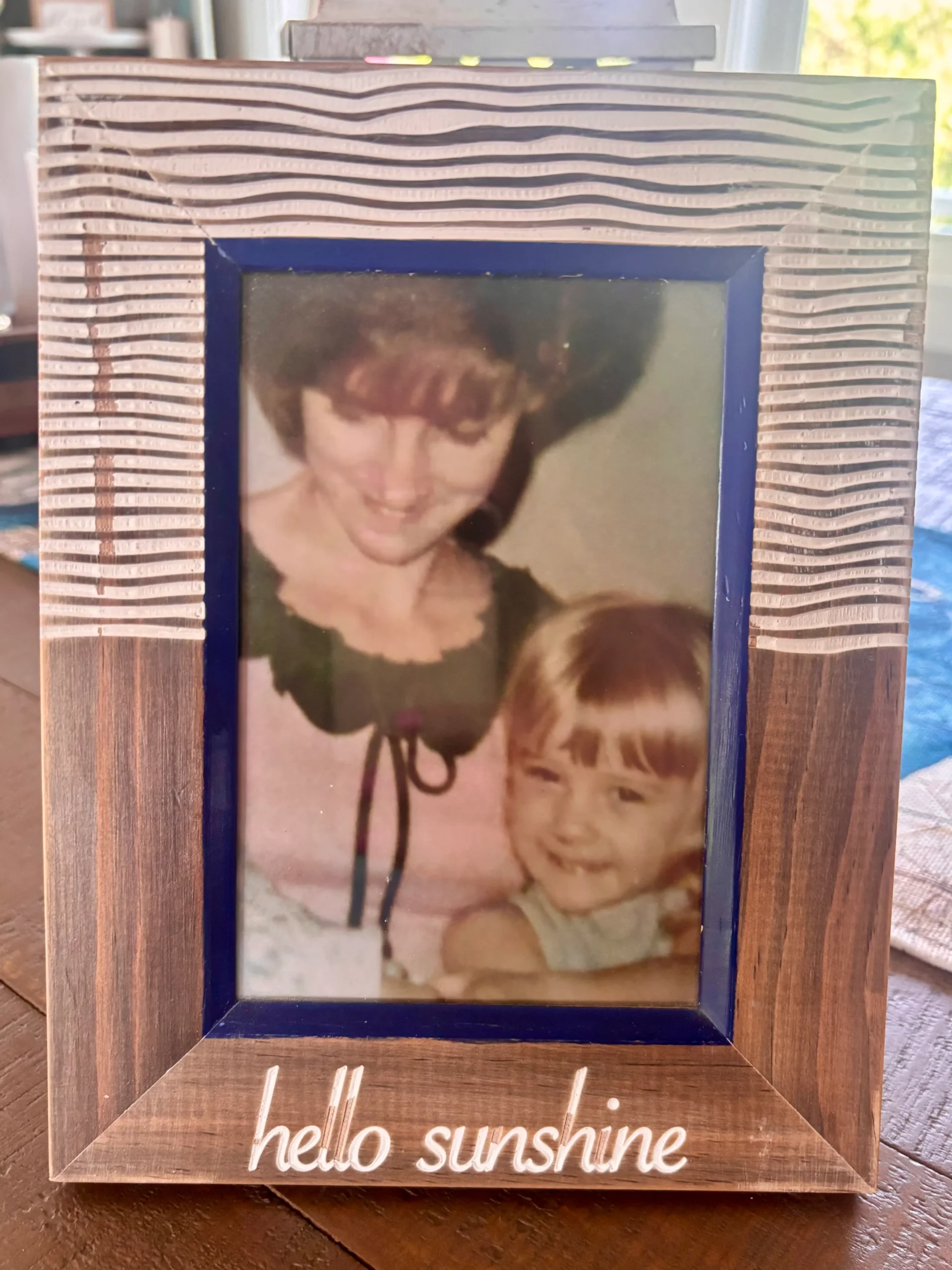
  • Honoring my Mother

    Honoring my Mother

    My journey to becoming a grief coach has, like many of yours, been beyond unexpected. When I say I have stood at the doorway of grief more times than I care to remember, it’s not just a phrase — it’s a reality I know all too well. 💔

    In January of 2011, I lost my beloved husband, Nick, to a cancer relapse after 22 years together. The loss was staggering, leaving behind a void in my soul that only time, faith, and love could begin to hold. 🙏

    But almost a year before Nick passed, my journey through grief began with the loss of my mother.

    A little about her… 💖 My mom was the true picture of a Southern belle — full of grace, grit, and quiet strength. Always put together, never leaving the house without her hair and makeup done just right (a trait I did not inherit!). 💄👠

    She built a life for herself after leaving her small country town, heading to the big city, and working hard until she retired from BellSouth. 📞

    She survived a long, abusive marriage, endured the unimaginable loss of her 18-month-old daughter, Amy 👼, and overcame a devastating motorcycle accident that left her an amputee — learning to walk again with a prosthetic. Through it all, she never lost her faith or her spirit. ✝️💪

    One of the things I’m most grateful for is that my mom took me to church — even if some Sundays it was with me kicking and screaming. 😅⛪

    Growing up as an only child, it was just the two of us most of the time, and she loved dressing me up in frilly little dresses and taking me to a sweet, tucked-away church at the end of a long dirt road. I still remember the peace of that place — especially the little lake beside it where people would gather to be baptized. 🌊

    Every Sunday morning, Sunday night, and Wednesday evening — we were there. Just me and her. 👩‍👧

    At the time, I didn’t fully understand it. But now, I see how sacred those moments were. That quiet rhythm of worship and togetherness rooted something deep in me. It anchored my heart to the love of God in ways I didn’t recognize then — but I hold onto now with such deep gratitude. 🌷

    Those memories are more than nostalgia… they’re part of the foundation of who I am.

    She faced every trial with courage and grace. She’ll always be one of the strongest women I’ve ever known. 💪❤️

    But on March 21, 2009, that changed. In a quiet hospital room, with my then, 15-year-old son Aaron, my husband Nick, and myself by her side, my mother took her final breath. In that moment, I felt only overwhelming sorrow — the kind that crashes over you like a wave you didn’t see coming. 🌊💔

    But in the months and years that followed, as I began to heal, I came to understand something profound.

    What I first saw as a moment of unbearable sadness was also a sacred honor. 🌿 My mother — who gave me life — left this world with her daughter, her grandson, and her son-in-law beside her. I was there to hold her hand, to whisper love and prayers, to witness her final breath.

    She brought me into this world, and I was given the holy privilege of being there when she left it. ✨

    She was only 62 years old. Too young. Too soon. But her legacy of love, resilience, and quiet strength still speaks to me in moments I need it most. 🕊️

    Grief doesn’t always come with clarity. Sometimes, it’s only when we look back that we see the grace hidden in our hardest moments.

    That day in the hospital is now one of the most sacred memories I hold. 🫶

    To those of you who are grieving — whether it’s your mother, your partner, or someone else deeply loved — I want to remind you:

    💞 The presence of love doesn’t end with loss.
    🌟 It lives on in the quiet moments, the memories, the legacy, and in the way we continue to show up — day by day.

    Your grief is sacred.
    Your love is eternal.
    And your story — no matter how heavy it feels today — is still unfolding with hope. 💫

  • 💞 Mom’s Advice… If She Could Speak Today 💞

    💞 Mom’s Advice… If She Could Speak Today 💞

    If mom were here today, I’d like to imagine she’d pull you close, and remind you of a few simple but powerful truths. Maybe they’re things she said all the time. Maybe they’re things you wish you could still hear. Maybe they are the things you needed or wanted to hear.  But in the quiet of your heart, maybe she’d say…

    “Don’t be so hard on yourself.”
    You’re doing better than you think. Life hasn’t been easy, and yet—you keep going. That matters more than you know.

    “Take care of yourself, sweetheart.”
    Rest when you’re tired. Eat something warm. Give yourself the kindness you so freely give to others. You’re worthy of the love you give away.

    “I’m proud of you.”
    Even when you didn’t feel strong, you found a way through. I see your courage. I see your heart.

    “You’re never alone.”
    I’m still with you—in every laugh, every story, every instinct that feels like love. I never left your side.

    “If she were here, maybe she’d also say, ‘I’m sorry for the things I didn’t get right… I was learning too. I loved you then, and I love you still. “

    If she could, maybe she would tell you that your tears are sacred. That your grief doesn’t make you weak—it shows just how deeply you’ve loved. Perhaps, she’d remind you that she sees you carrying on, and she’d smile at the way you carry pieces of her into the world.

    So today, whether you feel brave or broken, loud with laughter or quiet with longing… let her love wrap around you like a warm hug. Her wisdom still echoes in the choices you make. Her strength still breathes through your own.

    If your heart feels heavy today and you’re not sure how to carry it, that’s okay. You don’t have to have it all figured out. You’re simply doing your best to get through it, and that’s more than enough.”

    Your mother’s love lives on — and so does your story. 💗


  • After the Loss

    After the Loss

    I saw a quote recently that said, “When the funeral ends and the people go home, that’s when the real funeral begins.” And that hit me hard. It resonated with me to my core.


    I’ve been on both sides of this more times than I care to count—and I can tell you, it’s true. The hardest part of grief is often not the service, not the day of goodbye—but the silence that follows. The days, the weeks, the months later, when the world has moved on… and you haven’t yet.


    I can’t stress enough how important follow-up is AFTER the loss, AFTER the memorial, AFTER everyone has gone home. It’s in the quiet moments that grief starts to grow heavy, and it’s often in those moments that support is needed the most.


    I remember a friend who sent me a card every week for a year after my husband passed away. They seemed to arrive at just the right moment, reminding me I wasn’t forgotten. That simple act meant the world.


    Here are 3 heartfelt ways to support someone days/weeks/months AFTER their loss.


    Check in regularly – A text, call, or note just to say “I’m thinking of you” can bring light to a heavy day. Speaking from someone who has been there….this helps so much!

    Acknowledge milestones– The first birthday, anniversary, or holiday without a loved one is incredibly hard. A small gesture of remembrance goes a long way.

    Offer specific help – Instead of “let me know if you need anything,” say “Can I drop off dinner this week?” or “I’m free for a walk or coffee if you are up to it.”


    Grieving doesn’t end when the last person leaves the service—it’s only just beginning. It’s in the days and months that follow, when the casseroles stop coming and the phone stops ringing, that the weight of loss truly starts settling in. That’s when the quiet becomes loud, and the absence becomes painfully real. It’s in those moments that love, presence, and compassion matter the most.


  • Smiling through a Memory

    Smiling through a Memory

    I remember when I couldn’t even look at this memory without being swallowed by pain . It would send me spiraling, reminding me of everything I lost. But now, when it pops up, I smile. I feel grateful. It reminds me of a once-in-a-lifetime love that was real, deep, and beautiful. I’m thankful every time it appears.


    Getting here didn’t happen overnight. It took time. It took patience, growth, and a whole lot of grace . It took sitting with the pain instead of running from it, allowing it to teach me, shape me, and slowly release its grip. It meant surrendering to a process I couldn’t rush or control. It meant having faith when everything felt hopeless.


    There were countless prayers—whispered through tears in the quiet hours, begging God to hold me together when I felt like I was falling apart. There were days when it felt like I took one step forward only to fall three steps back. But even then, I was growing—with and through the pain. I was being refined, stripped of who I was before the loss, and slowly becoming someone new—someone braver, softer, and stronger.


    Every hurdle I overcame, every wave I rode out, brought me closer to this place—this space where I can hold grief and gratitude in the same breath. Where I can honor the loss without being consumed by it.


    To anyone who is in that dark place right now—please hold on. You are not alone. It will not always hurt like this. Your love mattered. Your grief matters. And your healing matters too.


    Give yourself time. Give yourself grace. And know that joy can live alongside sorrow. One day, the memory that once broke you might just become the very thing that reminds you how deeply you loved—and how deeply you were loved in return.


  • Why New Grief Feels Different from Older Grief

    Grief evolves over time. The pain of fresh loss is intense, raw and overwhelming, while older grief changes, becoming something we learn to carry differently. Here’s why new grief feels so different from grief that has been with us for a while:  


    🔹 The Shock Factor – In the beginning, grief can feel surreal, like a foggy haze. As time passes, the shock fades, and we begin truly processing the depth of our loss.  


    🔹 Emotional Intensity – New grief is raw, unpredictable, and often all-consuming. Over time, the emotions soften—not because we forget, but because we adapt.  


    🔹 The Adjustment Period – In the early days, everything feels different and uncertain. As we move forward, we begin to find ways to live with the loss, even as we continue to miss our loved one.  


    🔹 Memories Become Softer– At first, memories may be painful triggers. With time, they transform into cherished reminders of love, bringing more warmth than sorrow.  


    🔹 Grief Becomes a Part of Us– While new grief can feel like a wound that will never heal, older grief becomes something we carry with strength, woven into who we are.  


    If you’re in the depths of fresh grief, know that it won’t always feel this heavy. It won’t disappear, but it will change, and so will you. 


    How can a Grief Coach Can Help with New Grief:  


    Losing someone you love can feel overwhelming, and in the early days of grief, it may seem impossible to navigate. I am a certified grief coach that provides guidance, support, and encouragement as you begin to process your loss. I am also someone who has experienced grief many times and understands what it takes to get on a path to healing.   


    Here’s how I can help:  


    🔹 Providing a Safe Space to Talk – New grief can be isolating. I offer a compassionate, judgment-free space to express your emotions.  


    🔹 Helping You Understand Your Grief – Grief is unpredictable, and I aim to help you recognize that what you’re feeling—whether numbness, sadness, or anger—is normal.  


    🔹 Offering Coping Strategies – From managing triggers to dealing with daily life, I provides tools to help you navigate the hardest moments.  


    🔹 Guiding You Through the Firsts – First holidays, birthdays, or even everyday routines without your loved one can be painful. My goal is to help you prepare and find ways to honor your grief while still moving forward.  


    🔹 Encouraging Self-Compassion– It’s easy to feel like you “should” be handling grief a certain way. I want to reassure you that your journey is unique and that healing happens in its own time.  


    🔹 Helping You Find Meaning– Over time, grief transforms. I can support you in finding ways to carry your loved one’s memory with love instead of just pain.  


    If you’re struggling with fresh grief, you don’t have to go through it alone. As a certified grief coach I will walk beside you, offering support and hope as you take each step forward. 💙